

Elementary Mathematics For Teachers Answers
December 3, 2019
Addition and Subtraction
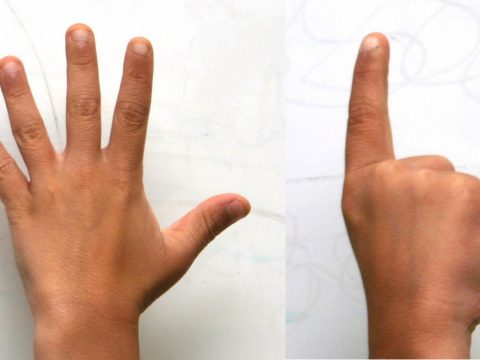
Addition and subtraction of whole numbers can be developed together, systematically, starting with recognition of quantities and combinations of quantities, the 10-based structure of the language […]
November 20, 2019
Algebraic Thinking
Number tricks are fun for children. The fun, all by itself, is valuable, but is not mathematics. But understanding how the trick works is good mathematical, often algebraic, learning.
November 20, 2019

Base Ten Blocks
This is a school term, sometimes used in teaching math. The word has no formal mathematical definition. A model for base 10 numeration. Ten copies of […]
February 7, 2020
Classroom Stories: Building Mathematical Structure
Paul shares a story about a surprising discovery he made while observing Emma and challenges us with a question: "How can we run a school in a way that gives teachers the time and support to watch and listen actively and to recognize, understand, and help children build on the underlying mathematical ideas?"
February 7, 2020
Classroom Stories: Building on Strengths
Teachers are often encouraged, sometimes compelled, to pre-assess students and then focus on their weaknesses. After all, what's teaching if not helping a child move from weakness to strength? But this story is about a different approach: recognizing and using strengths that are camouflaged by apparent weakness or hidden behind real weakness.
February 7, 2020
Classroom Stories: Correct Answer, Wrong Question
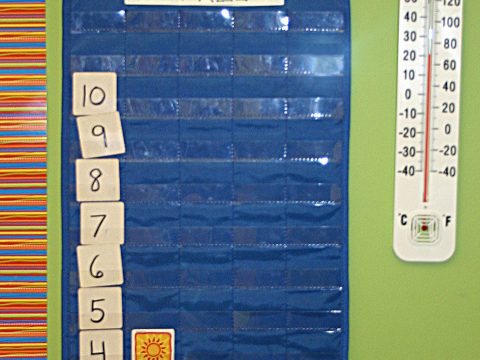
Very often—in fact, it seems to me, most of the time—hesitations or wrong answers in math class that are attributed to weakness in mathematics are the fallout from some confusion of communication. The source is not in the mathematics. In fact, "wrong" answers are often correct answers to an entirely reasonable alternative interpretation of the question.
November 21, 2019
Developing Mathematical Vocabulary
How to build mathematical vocabulary: Understand it well yourself (see glossary), and use it naturally (and correctly) in communication when you need it, in a rich enough context so that students can "figure out" the meaning from context, just as you might expect them to figure out the meaning of a new word that occurs in the middle of a story.
December 3, 2019
Difference of Squares
This page describes one silent teaching activity that serves, at the superficial level, to give students useful practice with multiplication facts, but that also builds deeper […]
December 3, 2019
Dimension
The word dimension is related to the word measure. It is used in two ways in geometry. It is used to specify a measurement: "What are […]
November 20, 2019
Factor
The terms factor and multiple are sometimes confused with each other. Factors of 15 include 3 and 5; multiples of 15 include 30, 45, 60 (and […]
November 21, 2019
Guess My Rule
How to Play Guess My Rule games are games in which one person thinks up and gives examples of some "rule," and the player(s) try to […]
November 21, 2019
January 9, 2020
Language and Mathematics
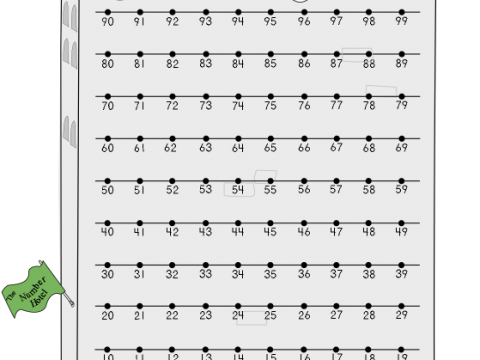
Children are extraordinary linguists! They acquire half their adult vocabulary and nearly all their adult grammar by the time they are 5 years old, mostly informally […]
January 9, 2020

Measurement: Volume
Informally, volume is the amount of (three-dimensional) "stuff." The volume of a body of water is how much water there is. The volume of a sculpture […]
December 3, 2019
Mental Math
Mental Math exercises are lively, brief, highly focused, and daily. They are strategically selected to build students' mental math skills quickly increase their capacity to hold […]
Elementary Mathematics For Teachers Answers
Source: https://elementarymath.edc.org/math-library/
Posted by: hansonachough1942.blogspot.com
0 Response to "Elementary Mathematics For Teachers Answers"
Post a Comment